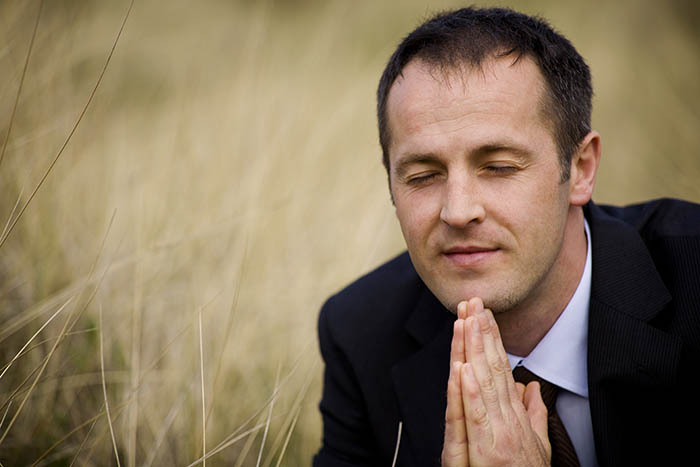
Uncertain times give us pause and challenge us to ask questions. I don’t want to sound negative, but given the uncertain start to this year, economically and politically, not to speak of the rise of terrorism, many people are anxious about the future.
In times of uncertainty it is always helpful to consider what encouragements we can draw from a richer understanding of God, his interactions with men and women, and his expectations of those who trust him.
In recent weeks we have been identifying highlights of God’s promises to his people through the prophet Isaiah. More than one hundred years before it happened he prophesied the conquest of the southern kingdom Judah and the fall of Jerusalem. But Isaiah also had a message of comfort and hope for people who trusted God. This is his theme from chapter 40 onwards.
In Isaiah 49, we read of the emergence of a new figure, known as God’s ‘Servant’ whose task would be to restore God’s people. For Isaiah’s first readers, ‘restoration’ meant the restoration of God’s people to their land and their city. Against all odds this occurred from 520BC.
LIGHT
But in Isaiah 49 there is another layer to the meaning of God’s Servant: Isaiah is also speaking of the coming of Jesus Christ whose work would bring the light of God’s truth to his people and to the nations. Indeed this Servant of God – Jesus Christ – would provide the means of restoration for a broken humanity: “I will give you as a light to the nations, that my salvation may reach to the end of the earth”(Isaiah 49:6).
And there is more, for in Isaiah 49:7 there is a subtle but significant shift in the meaning of the word Israel. Israel reverts to its meaning as the people of God – not just an individual figure.
With this shift there are significant nuances. In 49:6, the ‘Servant’ is told the Lord would make him a light for the Gentiles. In 49:8 Israel is told that the Lord will not just make a covenant with them,but that they will be the means of bringing God’s light to the nations.
This is profound. Isaiah is saying that the rescue and restoration of God’s people, Israel, will be a sign of his commitment to bless the nations. As we view this through the lens of the New Testament we see this applies to the church today. God’s people who are now freed by God’s grace through Jesus Christ, from a life of captivity to sin and death, are to say to those who are still captive to their fears, ‘Come out’, and to those in darkness, be free’ (49:9).
FOCUS
As Isaiah 49 moves on, the focus is not so much on the return of the exiles from Babylon or even on their spiritual restoration, but on the mission of God’s people to the nations. Indeed, in Isaiah 49:13 there is a great shout of praise to God. It is the sound of God’s people rejoicing as people come from all nations into the light of God’s truth and salvation. It is one reason for joy in our churches today.
In this election year in the United States millions of dollars are being spent and many thousands of volunteers are involved in the election process. Consider the impact God’s people could have for good, if only one tenth of these resources of money and people were put to the mission of Jesus Christ. Yet too often we are caught up with our own concerns and anxieties rather than living as God’s light. What was it that Jesus said? “You are the salt of the earth… You are the light of the world; a city set on a hill cannot be hidden…” (Matthew 5:13-14).
A paradox in life is that when we serve the needs of others we often find our own anxieties will fall away.
When the going gets tough in life it’s so easy to become fainthearted. We lose our energy and drive. Indeed the reality is that many situations in life challenge us to be tough-minded, and not fainthearted. As I considered this two quotes caught my attention – George Clooney’s, ’Growing old on screen is not for the faint of heart’; and Michael Douglas, ‘Capitalism is part of our system but it is not for the faint of heart’.
Two and a half millennia ago the Jewish people were faint of heart when in 586BC Babylonian forces had rampaged through their land, razing Jerusalem and its huge temple to the ground. Political obliteration seemed inevitable as the cream of the population was taken into exile in Babylon. Yet the extraordinary thing was this – Judah’s morale was not destroyed.
ISAIAH THE PROPHET
Isaiah, one of the prophets who had spoken of God’s impending judgment in the nation, had also sounded a voice of hope. It was his words that were the key to the people of Judah surviving.
His message of hope runs as a single thread from chapter 40:1 through the rest of his writing. He had begun by declaring God’s words to his people: “Comfort, comfort, my people” (40:1). And in the following chapters Isaiah went on to speak of a ‘Servant’ God would raise up – someone who would rescue and restore God’s people.
Isaiah had spoken of the way God would first raise up Cyrus, an insignificant prince from the north of Babylonia. Indeed, Cyrus became a great leader who crushed the Babylonians and paved the way for the Persian empire under Darius. Furthermore, Cyrus used his power in Babylon in 520BC to release of the Jewish exiles, permitting them to return to Jerusalem and restore their city. This actually happened.
A GLOBAL VISION
But that was not the end of the story. For when we turn to Isaiah 49 we see the rise of another unexpected figure – a Servant. ‘Who is this servant?’ we ask. Consider Isaiah’s first words in chapter 49: Listen to me, O coastlands, pay attention, you peoples from far away!
This is strange. God’s people were crying out for forgiveness and a fresh start, but this new figure does not address them directly at all. His strident words are addressed to the world at large, the islands and distant nations. Listen to me, O coastlands, pay attention, you peoples from far away! The mission of this man is not just to God’s people, but to the nations. His vision is global.
Yes, his work will involve restoration of the people of Judah – as we read in 49:5 – And now the Lord says, who formed me in the womb to be his servant, to bring Jacob back to him, and that Israel might be gathered to him, for I am honored in the sight of the Lord, and my God has become my strength—
The role of this figure in Isaiah 49 is to bring God’s people back to him, so that their relationship with him is truly restored. But God’s people needed to know something else: there is a needy world out there waiting to hear the truth about God. In Isaiah 49:6, we read: He says, “It is too light a thing that you should be my servant to raise up the tribes of Jacob and to restore the survivors of Israel…
DEALING WITH UNCERTAINTY
Too often we become faint-hearted because we fear the uncertainties of the future. We’re faint of heart because we focus too much on our own lives rather than on the needs and fears of others. The irony is that the healing of our own anxieties often begins when we stop thinking about ourselves and start looking outward to the world that God loves and that needs to know about him. Isaiah 49:6 continues, I will give you as a light to the nations, that my salvation may reach to the end of the earth.”
As we consider Isaiah’s words through the lens of the New Testament we see that the Servant he was speaking about is Jesus Christ. Jesus not only brought light to the world through the clarity and depth of his teaching but he also served humanity in its deepest need by conquering the power of sin and death. The God of the Bible is committed to serve.
God now calls on us to join him in this work of service. But it is not for the faint-hearted. For he wants us to get involved in the conversation with others around us – about life, its meaning and the importance of sorting out our relationship with the God who is there. God calls us to serve ‘the city’ where we live with joy in our hearts. He gives us his grace and strength to do so.
‘You’re just lucky,’ a young woman said to a friend who had announced her engagement to a young, macho, Wall Street success. How many people think that so much in our lives is due to luck? The English historian, A.J.P. Taylor in his Politics in Wartime observed that a question that was often used to assess a man’s practical value was, ‘Has he luck?’
‘Luck’ becomes a form of fatalism that says things happen in life as the result of ‘the random play of chance in human affairs’. If you get caught in an earthquake in LA, a shooting in Mexico, or floods in India, it’s simply bad luck. Fatalism springs from a sense of helplessness. As the song, Que sera, sera, put it,Whatever will be, will be.
Two and a half millennia ago the Jewish people, captive in ancient Babylon, could have been drawn to the idea of fate. Their captors were the inventors of astrology. They had developed all kinds of divination including the occult. The exiled Jewish people might well have asked, ‘Where is the power of the God of Israel compared with the power and scientific advances of the Babylonians?’ With the significant advances in science and technology around us today, we too may be tempted to ask, ‘Where is God’s power?’
We can draw strength from Isaiah’s response to an implied question: The Lord, your Redeemer and Creator, says: “I am the Lord, who made all things. I alone stretched out the heavens. By myself I made the earth and everything in it. I am the one who exposes the false prophets as liars by causing events to happen that are contrary to their predictions. I cause wise people to give bad advice, thus proving them to be fools (Isaiah 44:24-25).
WHO’S IN CONTROL?
‘Who’s in control?’ Isaiah was asking. The Babylonians thought they could read their destiny in the stars. But Isaiah’s response is to ask a question, ‘Who made them? The Lord did.’ (It is often helpful to ask yourself this question in times of temptation or when someone challenges you about a matter of faith.)
Indeed, Isaiah continues, ‘God, the Lord who created everything, has power over the details of the universe. He can even say to the rivers, “Be dry!” – and they are. And don’t be impressed by the wisdom of the wise,’ Isaiah continues, ‘God foils and overturns their wisdom’.
‘Think,’ says Isaiah. ‘Rather than the academics at the university of Babylon, it is God’s servants, the prophets, who bring you the truth. You want to know what will happen, then listen: Cyrus — God’s shepherd shall surely carry out his purpose’(44:28).
It’s hard for us to imagine the impact that Isaiah’s words would have had on his readers, for he was writing two hundred years before Cyrus was born. Furthermore, Cyrus would begin life as an obscure prince in the far north of Babylon. It was humanly inconceivable that he could rise and conquer the Babylonian empire and then later, give orders for the return of the Jews to their homeland – something he did around 520BC.
For Isaiah to speak of some future unknown, insignificant prince as God’sshepherd would have invited not just ridicule, but anger. Cyrus was no relation of Abraham let alone King David. But Isaiah insisted: Cyrus would rise and wield great power, which he would use for the benefit of God’s people. It would happen because God had decreed it.
In 45:5-6 we read: “I am the Lord, and there is no other; besides me there is no god. I arm you, though you do not know me, so that they may know, from the rising of the sun and from the west, that there is no one besides me; I am the Lord, and there is no other.”
God’s perspective of history is so different from ours. It’s worth thinking about Israel’s history. Archaeology tells us something of ancient Egypt’s history, but in God’s history book the most significant thing the Egyptians did was release a rabble of Semitic slaves. Or again, at the time of the Roman Empire, Pontius Pilate had a successful career in the Roman government; but in God’s book the significant thing for which he is known is his decision to crucify a man from Nazareth.
DIVINE INTERFERER
All this tells us something very significant about the stories of human affairs: God himself is involved, using human decisions to work out his greater purpose. C.S. Lewis spoke of God as the divine interferer. History is ultimately God’s story, for he is working out his plans in our fallen world.
Let’s always remember this – not least in times of social, political and economic turbulence!
Is what you believe about God important? Are you confident that God is infinitely wise as Article I of the Anglican Thirty-Nine Articles says? ‘…There is but one living and true God, everlasting,…; of infinite power, wisdom, and goodness;…’
It’s easy to doubt God’s power, wisdom and goodness because we hear of the injustices, the pain and suffering in the world. Indeed, we may doubt God because of the particular trials we are going through – an unhappy marriage or a sense of personal failure. We may feel that God is not answering our prayers and so we are tempted to wonder about him.
WHERE IS GOD?
The Israelites of whom Isaiah wrote, were in exile in Babylon. Their big question was, ‘Where is God?’ Prophets like Isaiah had warned them of God’s judgment unless they turned back to Him. However, they had listened to the popular preachers who had said all would be well. But the day did come (in 586BC) when the city and the temple were destroyed and the people were deported. Amazingly the Jewish people survived.
Isaiah 40 speaks not only of God’s power and wisdom but also of the comfort that his love and forgiveness bring when we repent. Isaiah 43:2 takes up the theme of God’s love with: When you pass through the waters I will be with you,…
GOD’S PRESENCE
God promised that he would be with his people even in the land of their exile. For us who live on the other side of Jesus’ death and resurrection, it’s an even richer promise, for we now have the evidence and reality of Emmanuel, God with us in the person of Jesus Christ.
The God of the Bible doesn’t promise to lift us out of our troubles with supernatural power. Faith is not a drug by which we escape the pain and suffering of a messed up world. The God of the Bible comes amongst us in our pain and shares in it.
This is the meaning of Bethlehem’s manger and Calvary’s cross. God doesn’t simply shout his condolences from the sky or tweet us sympathy notes. In his wisdom, God bore our grief and carried our sorrow. He descended to the lowest parts of the earth and experienced death for us.
There’s no other religion like this. There are scientists and philosophers, media commentators and gurus, but not one of them has scars in their hands. When you pass through the waters I’ll be with you… is the commitment of the all-mighty, all-wise God.
And that’s not all, for Isaiah also tells us of God’s protection: When you pass through the waters I will be with you; and through the rivers, they shall not overwhelm you; when you walk through fire you shall not be burned, and the flame shall not consume you. For I am the Lord your God, the Holy One of Israel, your Savior (43:2ff).
King David had understood this when he penned the words of Psalm 23: When I pass through the valley of the shadow of death I fear no evil, … for you are with me.
FALLEN WORLD
This is how the only wise God works with a fallen world. He promises his people his presence and protection. He sets a limit on anything that may destroy us. It doesn’t mean we won’t encounter tough times and it doesn’t mean we won’t experience death.
We’re not promised immunity from the floods and the fires, but we are promised a definite limit to the harm that any such experience can do to us. In Job 1:9-12 we read of the limit God placed on the action of the power of evil in Job’s life.
Yes, God sometimes allows the powers of evil to act in frightening ways – as we see when Jesus was scourged and crucified. But with Jesus’ resurrection we are assured God didn’t abandon his Son to eternal death.
Paul the apostle, in 2 Corinthians 12 tells us that he felt the pain and frustration of unanswered prayer. He experienced what he calls a ‘thorn in the flesh.’ Three times he agonized in prayer, but the thorn was not removed. He came to understood God’s mind: My grace is sufficient for you, for my strength is made perfect in weakness. Paul looked no further. If the thorn was needed to keep him from pride or success in his own strength, so be it. God could be trusted.
Do you have that kind of confidence in God? Pray then for his grace that you may know the reality of his presence and protection. Pray that God’s Spirit will take his promise deep into your heart so that you will know how precious you are to him. He has a purpose for his world, and for each one of us.
As we move into this New Year, many of God’s people are feeling like his people at the time of the Assyrian conquest of the Northern Kingdom Israel (721BC). In the words of Psalm 83 they feel encircled, even besieged by opposing forces – especially the anti-God forces of the secular West. So we need to ask one another, How big is your God?
FINDING TRUE GREATNESS
In the 1950s J.B. Philips wrote a book entitled, Your God is Too Small. It’s a good sub-title to Isaiah 40, a chapter worth reading and meditating on in tough times. Nowhere else does the Bible express so triumphantly the theme of the true greatness of God: To whom will you liken God? Isaiah asks (40:18). And more personally, he continues: To whom then will you compare me? (40:25)
In response to these ‘bookend’ questions, Isaiah asks a subset of questions – first, of the world of science:Who has measured the waters in the hollow of his hand, and marked off the heavens with a span, enclosed the dust of the earth in a measure, and weighed the mountains in scales and the hills in a balance? (40:12)
We like to think our knowledge of the universe is increasing. We can observe it and harness its resources. Isaiah asks, ‘Can you reposition the oceans or turn deserts into pastures at a word?’ God can. We don’t have God’s creative power.
Isaiah then asks the academies and professional worlds:Who has directed the Spirit of the Lord, or as his counselor has instructed him? Whom did he consult for his enlightenment, and who taught him the path of justice? Who taught him knowledge, and showed him the way of understanding? (40:13,14)
Today we consult experts in almost every area of life – legal, financial, design, career, travel. Isaiah asks, ‘What consultants does God use to create and control the world? What mathematicians? What scientists? None. He is all-knowing.
THE MORE WE KNOW, THE LESS WE KNOW
Many great scientists, Isaac Newton amongst them, have found that the more they know of the universe, the less they know. It is said that Newton once commented that ‘he felt like a little boy, standing on the edge of a huge ocean of truth, picking up the occasional pebble to admire, while the ocean lay undiscovered in front of him’.
The nations, Isaiah continues, are like a drop from a bucket (40:15). All the nations are as nothing before him… less than nothing and emptiness (40:17). As far as God is concerned, the wealth of all the nations could not enrich him.
‘What about other gods?’ people ask. Anticipating this, Isaiah responds: To whom then will you liken God, or what likeness compares with him? The idol! – A workman casts it, and a goldsmith overlays it with gold, and casts for it silver chains… (40:18-19). There is irony here. It’s illogical to say that a work of art can represent the creator God. Idols, unlike God, are without life and cannot give life.
‘Very well, what about the rulers of the world?’ others ask. Some of them hold themselves out as gods – Augustus Caesar and before him for example, Nebuchadnezzar. Do you not know? Do you not hear? Has it not been told you from the beginning? Have you not understood from the foundations of the earth? Isaiah asks. It is he who sits above the circle of the earth, and its inhabitants are like grasshoppers; who stretches out the heavens like a curtain, and spreads them like a tent to dwell in; who brings princes to nothing and makes the rulers of the earth as emptiness… (40:21-23).
TRUE GREATNESS
No president, prime minister or earthly power can be compared with God’s greatness. His throne fills the universe. He needs no city, for heaven and earth are his dwelling-place. God only has to blow, and the seemingly powerful, arrogant rulers will whither away. It’s one reason we can pray with confidence for the rulers of the nations – not least in this election year – as Paul commands us to do (1 Timothy 2:1-7).
To whom then will you liken God? Isaiah persists. Lift up your eyes and look to the heavens: who created them? he asks (40:26). ‘Day and night God controls the stars and the vast, complex cosmos in which we find ourselves. The whole of the universe is an arena for God’s artistry.’
We search the whole of the universe in vain for just one thing with which to compare the majesty, power and greatness of God. Nothing that we might worship, our science or technology, our giftedness or wisdom, our military or political power, or even the stars, can be compared with God. He is truly awesome.
If you are ever feeling discouraged and overwhelmed then consider again Isaiah’s picture of the awesome majesty of our God.
As we come to the end of one year and prepare for the next, the news media is alive with commentary from the past twelve months and predictions for the New Year. Indeed as one year closes and another opens there is an underlying fear amongst many.
As we think about the future a good question to ask is, ‘What on earth is God doing?’ The first sentence of one of the great chapters of the Bible, Isaiah 40, tells us: Comfort, comfort my people, says your God.
Written more than two and a half millennia ago, there’s a timelessness about these words as they speak to people in every age. As a lover speaking tenderly to someone he loves, God says to his people: ‘Comfort.’ And the tenderness of his language continues in Isaiah 40:11: He will feed his flock like a shepherd; he will gather the lambs in his arms, and carry them in his bosom…
SERVING A BIG GOD
At the start of a new year it’s good to ask who God is and what he is like. Only a big God can inspire us and keep going in challenging times. This is the God Isaiah speaks about.
Towards the end of this uplifting chapter that speaks of the uniqueness and the greatness of God, Isaiah points out that this God has power enough to sustain us in every situation in life. In Isaiah 40:29 we read: He gives power to the faint, and gives strength to the powerless. Even youths will faint and be weary, and the young will fall exhausted; but those who wait for the Lord shall renew their strength. They shall mount up with wings like eagles, they shall run and not be weary, they shall walk and not faint.
I wonder how we might have written the last two lines. Is not our natural inclination to think of walking, running and then moving to a climax, soaring higher and higher like eagles? But Isaiah’s order makes more sense for he has identified what life with God is really like. When we are faced with difficulties in life, what we need is not the soaring flight of an eagle but rather the determined endurance of a long-distance walker.
Flights of spiritual experience are of no use if they are followed immediately by plunges into dark depression. Walk and not faint. That’s what we need when we are faced with challenges and situations we don’t understand. We need the strength that only God can provide us.
WHEN THE NEW YEAR DOESN’T SEEM ‘NEW’
There may be some reading this who are privately weeping or who are bitter or resentful. You may be finding it hard to believe, hard to pray, hard to sing, even hard to read the Bible. Isaiah is telling us that God has not forgotten us.
We need to listen afresh to Isaiah’s words and fill our minds with the awesome majesty and love of God. The greatness of God’s power is matched by his love and compassion. This is why the opening words to Isaiah 40, ‘Comfort, comfort my people,’ are not empty or meaningless. Even in the midst of the worst situations in life, God provides us with the strength we need to endure.
GOD WITH US
Indeed, as we now read these words through the lens of the birth of Jesus Christ, his life, death and resurrection, we have even more reason to be assured by what Isaiah wrote. For as the Christmas season reminds us, we have the evidence of God at work in the world through the One who is called Emmanuel – God with us.
Here is the God worth knowing – the awesome and true God, who is Lord of all. Young men will grow weary. Their energy will pass and the fruit of all their successes will one day be nothing but dust for historians to record. But God’s people will never die out because of the coming of Jesus Christ, the one who supremely reveals the glory of God.
As we stand on the threshold of a new year, Isaiah’s words can inspire us. So important is the news of God’s love and forgiveness that it can’t be contained. God’s gospel must be shouted from the rooftops – not just in the cities of Judah, but to the nations of the world: Get you up on the high mountain, O Zion, heralds of good tidings, lift up, do not fear; say to the cities of Judah, ‘Here is your God!’
In the New Year let’s play our part in introducing our friends, family and colleagues to the God who is truly worth knowing.