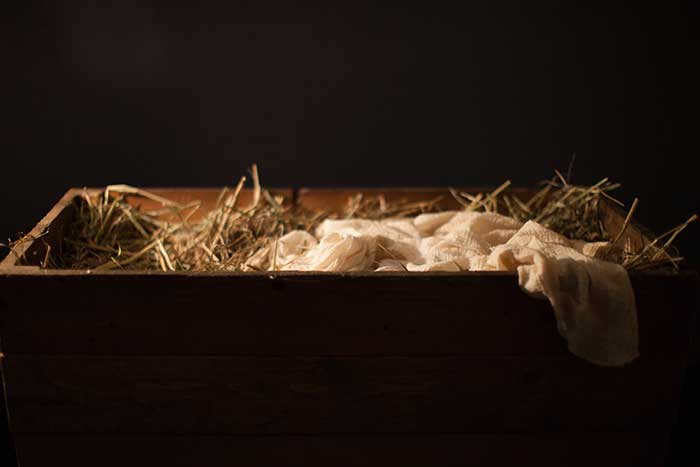
One of the encouraging things I love about the Bible is that it allows us to express our feelings. What is more, God understands us and works with us and through us for his greater purposes.
Matthew 1:20 records Joseph’s reaction to the news that Mary was pregnant with a word that is usually translated, ‘pondered’ or ‘considered’. However, as Kenneth Bailey in his Jesus Through Middle Eastern Eyes (IVP: Academic, 2008, p.44f) comments, another meaning of the original verb is ‘became angry’ or ‘upset’. This alternative helps us understand how Joseph who is spoken of as ‘being a just man’, would have felt – disappointed and betrayed, even angry.
Joseph had a problem: Mary was pregnant and he knew he wasn’t the father. Apart from the shame of an illegitimate baby, could he trust her? Significantly, it was at this point an angel spoke to him in a dream: “Joseph, Son of David, don’t be afraid to take Mary home as your wife, because what is conceived in her is from the Holy Spirit…” (Matthew 1:20). God was sensitive to Joseph’s feelings.
GOD INCARNATE
We can only begin to appreciate how Joseph must have felt. For a young woman to conceive a baby without sexual intercourse at the time of the first century Roman Empire was much more than the skills specialists in gynecology offer today. Joseph was being told by the angel that God was doing the unthinkable – taking on human form. Heaven was coming to earth.
Joseph could have continued with his plan, quietly to divorce Mary. It says a great deal about his faith and character that he took her home as his wife. How did he come to believe something so completely out of the ordinary?
He may have believed Mary’s news because it was so extraordinary. But, because he knew the Scriptures, there were other reasons too. He knew that God from time to time involved himself, even interfered, in human affairs for the good of his people. So it was now not out of the realm of possibility that God who had created men and women in his image, could take on human form.
And there is something else we usually overlook. We can appreciate that Joseph who is described as ‘just’ or ‘righteous’ (1:19) would have divorced Mary as the law of Moses prescribed. What is striking however, is that he intended to do this ‘privately’ rather than publicly shame her.
Kenneth Bailey (p.44) suggests that Joseph was willing to do this because of his understanding of the God of the Bible. God is patient and longsuffering and, above all, compassionate (as we see for example in Isaiah 42:1-9. Despite his first response of disappointment, even anger, Joseph did not want to bring down the full force of the law on Mary but rather treat her with compassion because she was ‘weak and exhausted’.
GOD DWELLING AMONG US
What Joseph knew of God from the Bible together with the unexpected and extraordinary nature of the angel’s announcement – an experience he could not deny – convinced him that, strange though it seemed, Mary’s baby was God taking on human form and coming to earth.
G.K. Chesterton once observed: Truth must necessarily be stranger than fiction, for fiction is the creation of the human mind and therefore congenial to it.
The angel’s words are unexpected and extra-ordinary. They speak of a God who was willing to come out of the silence of the universe and become one of us. He understands our emotions and works with them, as he did with Joseph’s. Indeed, the nature of Jesus’ birth is most encouraging, for it speaks of a God who is not aloof but approachable, not condemning but compassionate. Joseph may not then have understood it all, but he believed it. Do you?
A few of us were recently discussing the probability of the universe coming together by chance. Musing on this I asked, ‘I wonder what proportion of eminent scientists who say we exist by chance purchase lottery tickets?’
William Lane Craig in chapter 2 of his Reasonable Faith (1994) points out that This is a wager that all men must make—the game is in progress and a bet must be laid. There is no option: you have already joined the game…’
‘The choice should be made pragmatically in terms of maximizing one’s happiness,’ Craig notes Pascal saying. ‘If one wagers that God exists and he does, one has gained eternal life and infinite happiness. If he does not exist, one has lost nothing. On the other hand, if one wagers that God does not exist and he does, then one has suffered infinite loss. If he does not in fact exist, then one has gained nothing. Hence, the only prudent choice is to believe that God exists.’
In the last section of Luke 12 we read Jesus’ words about God’s impending judgment. Some who were listening to him asked him about an atrocity committed by Pilate. Apparently he had mingled the blood of some Galileans with their sacrifices (13:1), perhaps at Passover time. Jesus’ answer is clear but his words are tough: “Do you think that because these Galileans suffered in this way they were worse sinners than all other Galileans? No, I tell you; but unless you repent, you will all perish as they did…” (13:2-3).
Jesus is saying, ‘You are all guilty before God and justly deserving death. Be warned: men and women are out of step with their Maker’. Every earthquake and flood, every conflict and war is testimony to that. Life is unpredictable and temporary. We need to wake up to this and turn back to God while we have time. One day there will be a world without pain, but it will have to be a world without sin.
CHOICES
Jesus tells us that the choice we have is not only difficult but vital. To underline his point he told a parable about decisions gardeners have to make at times – to get rid of unproductive trees or to wait and see. Wise gardeners wait. They feed a plant, prune it and fertilize it. Only when it fails to respond do they pull it out: “Let it alone for one more year, until I dig around it and put manure on it. If it bears fruit next year, well and good; but if not, you can cut it down” (13:8-9).
Our family experienced this back in the 1980s when a couple of large eucalyptus trees, growing on land adjacent to our house, were apparently dying as the result of prolonged drought. I began watering around the roots, setting up sprinklers every evening. Gradually, as the water soaked into the ground and was absorbed by the roots, the trees regenerated and produced new growth.
There are times when we are tempted to think that Jesus will never return. But we should not confuse ‘patience’ with ‘indifference’. The fact that God does not intervene in a situation of injustice does not mean he is indifferent. Rather, as we read in 2 Peter 3:8-9, he is being patient.
ETERNITY
For many of his hearers that day, there were two critical events that would touch their lives – the first, his crucifixion and resurrection; the second, the fall of Jerusalem (see also 13:34-35; 19:41-44).
Jesus is saying that a third crisis is yet to come which will affect the whole world. For centuries the Jewish people had been waiting for the dawn of the age of the Messiah. ‘Well,’ says Jesus, ‘it is here; you are standing on the threshold of the new age, the edge of eternity.’
Jesus asks us the same question today: ‘How is it that you do not see the signs of the times in which you live?’ None of us can predict the future, but we can know for sure that one day Jesus will come again – it will be truly ‘the return of the king’. The second ‘coming’ will be very different from his first, for it will not be a hidden event seen only by a few, but will come with great fanfare and seen by everyone.
If we are tempted to doubt Jesus’ words we should note that the first two of his predictions have occurred! The probability of his third prediction happening is extraordinarily high.
Life can be so messy. Why doesn’t God step in now and bring to justice the perpetrators of wars, injustice and evil? These are real questions for us and for people we know.
SEASON OF ADVENT
The season of Advent is a good time to reflect on Jesus’ words about a day of reckoning (Luke 12:35-48). “You must also be ready, for the Son of man is coming at an unexpected hour,” he says (Luke 12:40). And, “…From everyone to whom much has been given, much will be required; and from the one to whom much has been entrusted, even more will be demanded,” we read in Luke 12:48.
Two metaphors speak of an end-of-time day.The first is a picture of a wealthy man away from home at an important wedding. The man’s servants, Jesus says, must be ready for his return no matter how late the hour: “Be dressed for action and have your lamps lit; be like those who are waiting for their master to return from the wedding banquet, so that they may open the door for him when he comes and knocks” (12:35-36).
The second is a picture of a homeowner whose mud-brick house is broken into (12:39). ‘The thief could not get away with his crime,’ Jesus says, ‘unless he had chosen an hour when he caught the homeowner unawares; if the owner had known, he would have taken precautions.’ Watchfulness is the overriding theme.
While some debate the precise reference of ‘the coming’ to which Jesus referred, either his death and resurrection, or his coming in glory, the dominating theme is the latter. With Jesus’ return, God’s judgment will be complete. Jesus’ words about justice and the temporary nature of wealth and possessions about which he has just spoken (Luke 12:1-12 and 12:13-34), will be shown to be all too true.
The two word pictures suggest three elements to the timing of his coming. It is imminent,the master could return at any time; there is delay, the master seems to be taking his time. We see this in 12:38 where Jesus said that it may be the second or the third watch in the night, that is, the early hours of the morning, when the master returns. And there is a third element: it will come as a surprise. In 12:39 the householder does not know when the thief will come.
It’s easy to miss the force of these pictures. Jesus is saying we need to live with the tension of imminence and delay. In the same way the servants needed to be ready for the return of their master – which could happen at any moment – we need to be ready for the return of Jesus.
Our problem is that we tend to ignore this reality. After all, two thousand years have come and gone and nothing has happened. We let ourselves drift into spiritual complacency. Yes, some who claim to follow Jesus Christ are constantly looking for signs. Some even set a date and, as occurred in May 2011, dispose of all their material possessions. But they ignore Jesus’ words: ‘When the day comes, it will come as a surprise. You won’t know when to expect it.’
Jesus wants us to balance the elements of imminence and delay. We make a serious mistake if we think we know the time of his return. Jesus said that not even he knew the time (Matthew 24:36).
ANGLICAN ADVENT
In this mean-time we need to get on with life, going to school or work, keeping on top of our expenses, and living in a way that reflects the reality of our relationship with Jesus. The return of the king will surprise us all. So we need to live with the expectation of it in our hearts.
And with that expectation we can be comforted with the assurance that justice will be done – all wrongs will be perfectly addressed. The question is, ‘Are we ready?’ for we too will be called to account. (1)
Note 1: My ‘Word’ this week is adapted from my commentary, Luke – An Unexpected God, Aquila, 2012, p.183f
Throughout this week, ‘Happy Thanksgiving’ will echo across the land from New York to San Francisco. The principle of ‘Thanksgiving’ has its origins in a non-sectarian expression of ‘thanks’ to a loving, merciful and generous God.
While Presidential Thanksgiving Proclamations are usually related to a special moment in the American story – as when Presidents Washington, Adams, and Lincoln made their Proclamations – the principle of a day of Thanksgiving continues. For example, in 1789 the first President, George Washington commended that a Day of Thanksgiving be held on Thursday, November 26 of that year. Thanksgiving this year (2015) again falls on November 26.
Washington’s 1789 Proclamation stated: Whereas it is the duty of all nations to acknowledge the providence of Almighty God, to obey His will, to be grateful for His benefits, and humbly to implore His protection and favor; and—Whereas both Houses of Congress have, by their joint committee, requested me “to recommend to the people of the United States a day of public thanksgiving and prayer, to be observed by acknowledging with grateful hearts the many and signal favors of Almighty God, especially by affording them an opportunity peaceably to establish a form of government for their safety and happiness:
When we think about it, Thanksgiving is a very Judaeo-Christian theme, for we find it both in the ‘Law, the Prophets and the Writings’ (Old Testament) as well as in the New Testament.
The Book of Psalms, bubbles throughout with the theme of Thanksgiving, often setting this in the context of God’s goodness in forming the creation, and his mercy towards his people even when they fell away from their wholehearted commitment to him.
For example in the opening lines of Psalm 103 we read: Bless the Lord, O my soul, and all that is within me, bless his holy name. Bless the Lord, O my soul, and do not forget all his benefits— who forgives all your iniquity, who heals all your diseases, who redeems your life from the Pit, who crowns you with steadfast love and mercy, who satisfies you with good as long as you live so that your youth is renewed like the eagle’s (Ps. 103:1-5).
What is interesting here is that King David, the song-writer, is not talking to God as he usually does in his songs or psalms. He is talking to himself – to his soul. In fact he continues a conversation with himself through the first five verses.
BACKSLIDING INTO THANKLESSNESS
He is telling himself things he knew he needed to hear. He knew enough about himself to realize that he could slide into being a thankless man of God. And so it is, as he considers afresh who God is and what he has done for him, he reflects on the goodness of God. He identifies God’s many blessings, lest in times of disappointment or backsliding he forgets the source of his prosperity and success and take God’s grace for granted.
It’s an exhortation we all need to hear. We ought to treat God with great honor, for He is so good to us in a thousand different ways. He is never over-indulgent. He disciplines us when we need it, and, for our good he doesn’t give us everything we want when we want it. Yet his kindness is vast – often giving us unexpected good things.
The sad reality is that most of us simply forget to thank God for all his goodness. We take it all for granted. Like nine of the ten lepers Jesus once healed, we don’t even offer one word of thanks.
Paul the Apostle in the New Testament urges us to pray with a sense of thankfulness in our hearts: Do not be anxious about anything, but in everything, by prayer and petition, with thanksgiving, present your requests to God…(Philippians 4:5-6).
Bless the Lord, O my soul, and all that is within me, bless his holy name. Bless the Lord, O my soul, and do not forget all his benefits— who forgives all your iniquity, who heals all your diseases, who redeems your life from the Pit, who crowns you with steadfast love and mercy, who satisfies you with good as long as you live so that your youth is renewed like the eagle’s (Ps. 103:1-5).
The Lord’s Prayer is a prayer so many of us have known since childhood. Because it is so familiar to us, do we see what a big, exciting prayer it actually is? A prayer for the honour of God’s name and the triumph of his cause; looking to the great day when every knee will bow and every tongue confess, ‘Jesus Christ is Lord’.
But the prayer also acknowledges that God’s kingdom has not fully come. We await the day of the return of the king. And while we wait, are to pray for our present situation: ‘Give us today our daily bread’ or, ‘Give us today the bread of tomorrow,’ we pray. Daily breadmeans food for our physical bodies but also food for our souls.
But notice, there is something else we need to pray for – forgiveness. “Forgive us our sins or, trespasses, as we forgive those who sin against us,” Jesus taught (Matthew 6:12).
AM I STILL WITHHOLDING FORGIVENESS?
Have you ever paused at these words and reflected: ‘Who haven’t I forgiven?’ And then someone comes to mind. What do you do with thought?
There is a sting here, for Jesus is saying that if we expect God to forgive us, we need to know deep down that we have forgiven those who have wronged us.
And in case we miss the point in the prayer, we can’t easily overlook Jesus comment in Matthew 6:14: ‘For if you forgive others their trespasses, your heavenly Father will also forgive you. But if you do not forgive others, neither will your Father forgive you your trespasses.’
Chilling words! If we are not willing to hold out forgiveness to others, God will not forgive us. In Colossians 3:13 Paul the Apostle puts it this way: Bear with each other and forgive whatever grievances you may have against one another. Forgive as the Lord forgives you (Colossians 3:14).
God has every reason to be hostile towards us. In our natural state we are his enemies. We flout his law, and we ignore him. But what has God done? When Christ died on the cross he took into himself the pain that we caused. If God has been willing to make that kind of sacrifice for us, shouldn’t we also be prepared to find it in our hearts to forgive those who have wronged us?
It is said a friend once reminded Clara Barton, the founder of the American Red Cross, of a particularly cruel thing someone had done to her. Clara Barton didn’t seem to remember it. ‘But you must,’ her friend said. ‘No’, was the reply, ‘I distinctly remember forgetting it.’
To hold out forgiveness does not necessarily mean reconciliation. For in the same way we need to turn to Jesus Christ with an honest, repentant spirit, so anyone who has wronged us also needs to repent. It’s true in church, in a marriage, in a family, and the community.
WILLING HEARTS
But the starting point needs to be a change of heart within us – a willingness to forgive. Forgive as the Lord forgave you, says Paul. Put on love which binds you all together. Paul knew how easy it is for us to be divided. He knows the corrosive effect of wounded feelings. But he also knows of one force that can heal and enable us to grow into maturity – Love.
Love is patient and kind, he writes in 1 Corinthians 13. Love does not insist on its own way.
Love is not irritable or resentful. Love bears all things, endures all things, and hopes all things. Love is optimistic. The idea of division and resentment is too painful where love operates. ‘Put on love,’ he says. ‘It is like a supernatural glue.’
This is where God’s people, as individuals and in our churches, should be so different from the culture. The New Testament insists that the church is the one place where the ethics of heaven ought to prevail — the ethics of love and mercy, of loving our enemies, of being reconciled with one another rather than taking revenge or personal retribution. God expects us to go the way of grace rather than demanding strict justice. As God’s people we should be able to function on the principle of turning the other cheek.
Consider those who have wronged you – those you resent and feel angry towards. ‘Pray about your attitude,’ says Paul. Can you forgive them? Do you care for them? Above all will you love them?