Arise, shine; for your light has come, and the glory of the Lord has risen upon you. 2 For darkness shall cover the earth, and thick darkness the peoples; but the Lord will arise upon you, and his glory will appear over you. 3 Nations shall come to your light, and kings to the brightness of your dawn. 4 Lift up your eyes and look around; they all gather together, they come to you; your sons shall come from far away, and your daughters shall be carried on their nurses’ arms. 5 Then you shall see and be radiant; your heart shall thrill and rejoice, because the abundance of the sea shall be brought to you, the wealth of the nations shall come to you. 6 A multitude of camels shall cover you, the young camels of Midian and Ephah; all those from Sheba shall come.They shall bring gold and frankincense, and shall proclaim the praise of the Lord. 7 All the flocks of Kedar shall be gathered to you, the rams of Nebaioth shall minister to you; they shall be acceptable on my altar, and I will glorify my glorious house. 8 Who are these that fly like a cloud, and like doves to their windows? 9 For the coastlands shall wait for me, the ships of Tarshish first, to bring your children from far away, their silver and gold with them, for the name of the Lord your God, and for the Holy One of Israel, because he has glorified you. 10 Foreigners shall build up your walls, and their kings shall minister to you; for in my wrath I struck you down, but in my favor I have had mercy on you. 11 Your gates shall always be open; day and night they shall not be shut, so that nations shall bring you their wealth, with their kings led in procession. 12 For the nation and kingdom that will not serve you shall perish; those nations shall be utterly laid waste.
THE GLORY TO COME
Cities have become so synonymous with evil and corruption, poverty and injustice that we tend to overlook the significance of the city in the Bible. The Scriptures often speak of the City of Zion or Jerusalem as a picture of God’s rule and his presence with his people. Here the prophet is encouraging God’s people whose city had been destroyed, assuring them that darkness and despair would give way to light and hope and that God would establish his City – the City of Zion. He pictures the sun rising over Jerusalem – a sight that tourists today still marvel at as it lights up her walls and towers, the domes and roofs.
Historically Isaiah’s words came true, for against all odds, the Jews returned to Jerusalem and rebuilt it. Cyrus the Mede, as Isaiah had indicated (Isaiah 45), did conquer Babylon and in 520 BC he decreed that the Jews could return to their homeland.
But Isaiah was not just pointing to the city of Jerusalem that was rebuilt after the exile. He was pointing to the time when God’s rule would come down to earth. God would bring in a whole new order, a new creation. The city of which Isaiah spoke was a picture of God’s rule and the glory of a new and lasting city where God himself would fill the city with the light of this presence.
The imagery of light and darkness is often used to portray God’s creating work. In Genesis 1 we read that thick darkness covered the earth, but God’s light overcame it. Here in Isaiah 60 darkness is a metaphor for moral evil and spiritual blindness. Light is a picture of God’s coming to rescue his people. In God’s new city there will be no need of a sun or a moon, for God’s glory will shine forever.
Notice too that God’s light will shine world-wide: Nations shall come to your light (60:3), and kings to the brightness of your dawn. Those who refuse to turn to God will perish (60:12). It is one of the ironies of history that the power of Rome that crucified Jesus in the first century, capitulated to him in the fourth, when the emperor Constantine was baptized. It is striking proof that Isaiah’s words were no dream. The power of human kingdoms will fail and the kingdoms of the world will amass their wealth, only to lay it down again at the feet of the King of kings.
It was an inspiring and encouraging picture. How much more should it encourage us, for we live on the other side of the coming of God’s King, Jesus the Messiah. With his coming we can see much more clearly the success of God’s rule. God’s rule and God’s royal City will be established in glory and greatness forever.
More than six hundred years after Isaiah wrote, one of Jesus’ biographers, Matthew, tells us that wise men came from the region of Babylon to Jerusalem bearing gifts and seeking the one who had been born ‘King of the Jews’. They had come to worship him. It was inside the walls of Jerusalem that Jesus taught, it was outside her walls that Jesus died. Thousands in that city were drawn to him and came to worship him. Since that time billions from around the world have come to him. People from all nations have poured their wealth into his service. It is an amazing picture; it is a picture that we long for. The great thing is that it is a picture that, because it is grounded in history, rings true.
Furthermore, Isaiah tells us there will be a permanence about God’s City: Whereas you have been forsaken and hated, with no one passing through, I will make you majestic for ever, a joy from age to age (60:15).
Forever and everlasting are key words. At one level we see that Jerusalem is a city of bricks and mortar — a city in history. At another level we see Zion as a glorious everlasting City with its inhabitants gathered by God to be with him forever: You shall know that I, the Lord, am your Savior and your Redeemer, the Mighty One of Jacob (60:16). Furthermore, God himself will give light to his people: Your sun shall no more go down, nor your moon withdraw itself; for the Lord will be your everlasting light, and your days of mourning shall be ended (60:20).
WHAT’S THE POINT?
There are times in life when we are tempted to ask, ‘What’s the point of going on? What’s the point of raising a family? What’s the point of praying and going to church? Whatever I do is pointless.’
By way of answer, Isaiah uses the language of the first city of Jerusalem to point us to our ultimate destiny. Believing people from all ages, from all nations, will one day be beneficiaries of God’s ancient promises to Abraham, Moses and David. People will be drawn from every generation, from every corner of the world to be with him in the City he has created. Revelation 21:1–5 picks up the imagery:
Then I saw a new heaven and a new earth; for the first heaven and the first earth had passed away, and the sea was no more. 2 And I saw the holy city, the new Jerusalem, coming down out of heaven from God, prepared as a bride adorned for her husband. 3 And I heard a loud voice from the throne saying, “See, the home of God is among mortals. He will dwell with them as their God; they will be his peoples, and God himself will be with them; 4 he will wipe every tear from their eyes. Death will be no more; mourning and crying and pain will be no more, for the first things have passed away.” 5 And the one who was seated on the throne said, “See, I am making all things new.”
This is our ultimate destiny — a City, a new Jerusalem, with countless throngs of people; a City where there will be meaningful relationships and social structure, and even work to do; a city where there will be no more grief; and above all, a city where God himself will be seen to be with his people. It is an awesome and exciting picture.
However, we need to be realistic: God’s new Jerusalem will only be brought in through his intervention. The new city lies on the other side of a cosmic discontinuity which God must bring about. Only then will God’s people be delivered from the tragic consequences of the present world. We need to be biblical followers of Jesus Christ. What we do in this world has significance, what we do in this world can change things, what we do in the service of Christ in this world lasts. When we know that, we know why we work, why we try to improve the world, why we create: all of our work has a place in God’s new order and will be made a part of the City that he will build. It is exactly that kind of hope that this great prophet of ancient Israel is encouraging us to embrace in this chapter when he says, Arise, shine; for your light has come, and the glory of the Lord has risen upon you.
Consider:
1. the response of Isaiah’s first readers to the words of this chapter; 2. your response to Isaiah’s words when you feel that there’s no future for you; 3. how you can be a ‘biblical Christian’, living a meaningful life now with the tension the hope of God’s new city before you and knowing that God has a purpose for you now.
Cities have become so synonymous with evil and corruption, poverty and injustice that we tend to overlook the significance of the city in the Bible. The Scriptures often speak of the City of Zion or Jerusalem as a picture of God’s rule and his presence with his people.
In Isaiah 60:1-5 the prophet encourages God’s people that their time of darkness and despair, because they were in exile, would give way to a say of light and hope. God would establish his City – the City of Zion. He pictures the sun rising over Jerusalem – a sight that tourists today still marvel at as it lights up her walls and towers, the domes and roofs:
Arise, shine; for your light has come, and the glory of the Lord has risen upon you. For darkness shall cover the earth, and thick darkness the peoples; but the Lord will arise upon you, and his glory will appear over you. Nations shall come to your light, and kings to the brightness of your dawn. Lift up your eyes and look around; they all gather together, they come to you; your sons shall come from far away, and your daughters shall be carried on their nurses’ arms. Then you shall see and be radiant; your heart shall thrill and rejoice, because the abundance of the sea shall be brought to you, the wealth of the nations shall come to you (Isaiah 60:1-5).
Historically Isaiah’s words came true, for against all odds, the Jewish people returned to Jerusalem and rebuilt it. Cyrus the Mede, as Isaiah had indicated (Isaiah 45), conquered Babylon, and in 520 BC he decreed that the Jewish people could return to their homeland.
But Isaiah was not just pointing to the city of Jerusalem that was rebuilt after the exile. He was pointing to the time when God’s rule would come down to earth. God would bring in a whole new order, a new creation. The city of which Isaiah spoke was a picture of God’s kingdom and the glory of a new and lasting city where God himself would fill the city with the light of his presence.
LIGHT AND DARKNESS
The imagery of light and darkness is often used to portray God’s creating work. In Genesis 1 we read that thick darkness covered the earth, but God’s light overcame it. Here in Isaiah 60 darkness is a metaphor for moral evil and spiritual blindness. Light is a picture of God’s coming to rescue his people. In God’s new city there will be no need of a sun or a moon, for God’s glory will shine forever.
Furthermore, God’s light will shine worldwide: Nations shall come to your light (60:3), and kings to the brightness of your dawn. Those who refuse to turn to God will perish (60:12). It is one of the ironies of history that the power of Rome that crucified Jesus in the first century, capitulated to him in the fourth, when the emperor Constantine was baptized. It is striking proof that Isaiah’s words were no dream. The power of human kingdoms will fail and the kingdoms of the world will amass their wealth, only to lay it down again at the feet of the King of kings. It is an inspiring and encouraging picture.
How much more should it encourage us, for we live on the other side of the coming of God’s King, Jesus the Messiah. With his coming we see more clearly that God’s kingdom will succeed and that God’s royal City, the new Jerusalem, will be established in glory and greatness forever.
However, we need to be realistic: God’s city lies on the other side of a cosmic discontinuity. God will need to intervene through the return of his anointed King. Only then will God’s people be delivered from the tragic consequences of the present world.
What we need to remember is that what we do now has significance – for what we do in this world can change things. Indeed, what we do in the service of Christ in this world lasts. When we know that, we know why we work, why we try to serve the city. Each day it is worth praying, ‘Lord what good things have you for me to do today in building the City to come?’
God has a purpose for us all. We are moving towards the end of time, to a new and lasting City. Let’s embrace the words of a great prophet of ancient Israel when he says, Arise, shine; for your light has come, and the glory of the Lord has risen upon you.
You may like to consider:
1. the response of Isaiah’s first readers to the words of this chapter;
2. your response to Isaiah’s words when you feel that there’s no future for you;
3. how you can live a meaningful life now with the tension the hope of God’s new city before you and knowing that God has a purpose for you now.
Comfort, O comfort my people, says your God. 2 Speak tenderly to Jerusalem, and cry to her that she has served her term, that her penalty is paid, that she has received from the Lord’s hand double for all her sins.
3 A voice cries out: “In the wilderness prepare the way of the Lord, make straight in the desert a highway for our God. 4 Every valley shall be lifted up, and every mountain and hill be made low; the uneven ground shall become level, and the rough places a plain. 5 Then the glory of the Lord shall be revealed, and all people shall see it together, for the mouth of the Lord has spoken.” 6 A voice says, “Cry out!” And I said, “What shall I cry?” All people are grass, their constancy is like the flower of the field. 7 The grass withers, the flower fades, when the breath of the Lord blows upon it; surely the people are grass. 8 The grass withers, the flower fades; but the word of our God will stand forever. 9 Get you up to a high mountain, O Zion, herald of good tidings; lift up your voice with strength, O Jerusalem, herald of good tidings, lift it up, do not fear; say to the cities of Judah, “Here is your God!” 10 See, the Lord God comes with might, and his arm rules for him; his reward is with him, and his recompense before him. 11 He will feed his flock like a shepherd; he will gather the lambs in his arms, and carry them in his bosom, and gently lead the mother sheep. 12 Who has measured the waters in the hollow of his hand and marked off the heavens with a span, enclosed the dust of the earth in a measure, and weighed the mountains in scales and the hills in a balance? 13 Who has directed the spirit of the Lord, or as his counselor has instructed him? 14 Whom did he consult for his enlightenment, and who taught him the path of justice? Who taught him knowledge, and showed him the way of understanding? 15 Even the nations are like a drop from a bucket, and are accounted as dust on the scales; see, he takes up the isles like fine dust. 16 Lebanon would not provide fuel enough, nor are its animals enough for a burnt offering. 17 All the nations are as nothing before him; they are accounted by him as less than nothing and emptiness. 18 To whom then will you liken God, or what likeness compare with him? 19 An idol? —A workman casts it, and a goldsmith overlays it with gold, and casts for it silver chains. 20 As a gift one chooses mulberry wood —wood that will not rot—then seeks out a skilled artisan to set up an image that will not topple. 21 Have you not known? Have you not heard? Has it not been told you from the beginning? Have you not understood from the foundations of the earth? 22 It is he who sits above the circle of the earth, and its inhabitants are like grasshoppers; who stretches out the heavens like a curtain, and spreads them like a tent to live in; 23 who brings princes to naught, and makes the rulers of the earth as nothing. 24 Scarcely are they planted, scarcely sown, scarcely has their stem taken root in the earth, when he blows upon them, and they wither, and the tempest carries them off like stubble. 25 To whom then will you compare me, or who is my equal? says the Holy One. 26 Lift up your eyes on high and see: Who created these? He who brings out their host and numbers them, calling them all by name; because he is great in strength, mighty in power, not one is missing. 27 Why do you say, O Jacob, and speak, O Israel, “My way is hidden from the Lord, and my right is disregarded by my God”? 28 Have you not known? Have you not heard? The Lord is the everlasting God, the Creator of the ends of the earth. He does not faint or grow weary; his understanding is unsearchable. 29 He gives power to the faint, and strengthens the powerless. 30 Even youths will faint and be weary, and the young will fall exhausted; 31 but those who wait for the Lord shall renew their strength, they shall mount up with wings like eagles, they shall run and not be weary, they shall walk and not faint.
HOPE’S COMFORT
The issue of suffering and hardship is one of the toughest questions professing Christians face. We almost become immune to news of the tragedies and injustices, poverty and hardship that so many experience – until they touch us. In those times of suffering and grief we so often ask ‘Why?’ and long for genuine comfort and hope.
One of the great chapters of the Bible, Isaiah 40, offers us a framework to live by. Some two and a half milennia ago, Israel, once a great nation of the ancient world, had been brought low by the conquering armies of Babylon. It is quite impossible to imagine the shattering effect those events would have had on the faith of those people. Their temple was in ruins, their economy was in tatters and their homes were destroyed.
Now they were in exile. **The temptation to reject their God would have been enormous. ** But the faith of ancient Israel survived through the voice of the prophets such as Isaiah. Consider the opening words of Isaiah 40: Comfort, comfort my people, says your God. And the tenderness of his language continues: He will feed his flock like a shepherd; he will gather the lambs in his arms, and carry them in his bosom… (40:11).
Isaiah’s strategy was to paint a picture of the awesome majesty of God – ‘Consider your God,’ he said; he then asked a question; and finally he challenges and comforts us.
Nowhere does the Bible exult in the greatness of God so triumphantly as in this chapter: To whom then will you liken God? we read in 40:18; and, more personally, in 40:25, To whom then will you compare me? He puts his questions to scientists (40:12), to the wise (40:13–14), to leaders (40:15–17); to idol worshippers (40:18–19), asking, to whom or to what they would liken God. There is no-one or nothing as great and as awesome as God. ‘How can you say,’ Isaiah asks, ‘God has forgotten you?’ (40:27ff) Isaiah wanted his readers then and you and me today to know that God will not abandon anyone on whom he has set his love. Yes, he let his ancient people suffer for a while, but he never let them go. He even let Jesus die on a cross, but at the right time he raised him from death. We can have every confidence in God’s commitment to our good. He’s big enough, awesome enough, and loving enough, to carry out our rescue.
No matter how heart-breaking our situation, no matter how perplexing, we can be assured that life is not out of God’s control. Tragedies and disasters don’t mean that God’s hands have slipped from the helm or that he is asleep. They are events allowed by a sovereign God who is in control, and who often uses such events as a wake up call for us.
Which brings us to Isaiah’s memorable conclusion. Because this God is so great, he has power enough to sustain us in our distress: He gives power to the faint, and gives strength to the powerless (40:29). And what is it that we most need in difficult times – fleetness of foot, the wings of an eagle? No: the persistent endurance and determination of a long-distance walker – walk and not faint (40:31).
Consider:
1. What does the word ‘God’ mean to you?
2. Can God always be trusted in the tough times of life?
3. How big is your God? Have you ever said to him, ‘I love you Lord’?
1 Now when the king was settled in his house, and the Lord had given him rest from all his enemies around him, 2 the king said to the prophet Nathan, “See now, I am living in a house of cedar, but the ark of God stays in a tent.” 3 Nathan said to the king, “Go, do all that you have in mind; for the Lord is with you.” 4 But that same night the word of the Lord came to Nathan: 5 Go and tell my servant David: Thus says the Lord: Are you the one to build me a house to live in? 6 I have not lived in a house since the day I brought up the people of Israel from Egypt to this day, but I have been moving about in a tent and a tabernacle. 7 Wherever I have moved about among all the people of Israel, did I ever speak a word with any of the tribal leaders of Israel, whom I commanded to shepherd my people Israel, saying, “Why have you not built me a house of cedar?” 8 Now therefore thus you shall say to my servant David: Thus says the Lord of hosts: I took you from the pasture, from following the sheep to be prince over my people Israel; 9 and I have been with you wherever you went, and have cut off all your enemies from before you; and I will make for you a great name, like the name of the great ones of the earth. 10 And I will appoint a place for my people Israel and will plant them, so that they may live in their own place, and be disturbed no more; and evildoers shall afflict them no more, as formerly, 11 from the time that I appointed judges over my people Israel; and I will give you rest from all your enemies. Moreover the Lord declares to you that the Lord will make you a house. 12 When your days are fulfilled and you lie down with your ancestors, I will raise up your offspring after you, who shall come forth from your body, and I will establish his kingdom. 13 He shall build a house for my name, and I will establish the throne of his kingdom forever. 14 I will be a father to him, and he shall be a son to me. When he commits iniquity, I will punish him with a rod such as mortals use, with blows inflicted by human beings. 15 But I will not take my steadfast love from him, as I took it from Saul, whom I put away from before you. 16 Your house and your kingdom shall be made sure forever before me; your throne shall be established forever. 17 In accordance with all these words and with all this vision, Nathan spoke to David.
See also Isaiah 9:6–7 6 For a child has been born for us, a son given to us; authority rests upon his shoulders; and he is named Wonderful Counselor, Mighty God, Everlasting Father, Prince of Peace. 7 His authority shall grow continually, and there shall be endless peace for the throne of David and his kingdom. He will establish and uphold it with justice and with righteousness from this time onward and forevermore. The zeal of the Lord of hosts will do this.
A LEADER WE LONG FOR
Presidential elections remind us how much people long for a leader – a leader who will bring justice and peace, protection and prosperity. However, all too often people’s aspirations are dashed as leaders reveal their own flaws and failures. No one person proves to be the ideal leader – with one exception.
One of the main themes that the Bible develops is that of a king whom God will appoint and through whom he will bring redemption. During the reign of King David, some one thousand years after Abraham (c. 10th cent. B.C.), we learn that key elements of God’s promises to Abraham have been fulfilled – his descendants are many, they possess the land from the River Nile in Egypt to the Euphrates River (modern Iraq), and there is a king (David) who has laid the foundation for a time of peace and prosperity under his descendants, in the first instance, his son Solomon.
During his reign David spoke with Nathan the prophet about building a house (temple) for God. He thought that things were not right spiritually in the kingdom – he lived in a palace but ‘the ark of God’ which was the focus of God’s presence among the people ‘dwells in a tent’ (7:2). He wanted to build a ‘place’ for God. God, however, through his prophet Nathan, wanted David to understand a bigger picture – first, God is not limited to buildings; second, he intended to make David’s name ‘great’ and establish his (David’s) ‘house’ (dynasty) forever. The king who would sit on David’s throne will not get these through personal posturing or political intrigue, but will be ‘chosen’ by God. God will raise up a ‘descendant’ of David who will reign over Israel (heirs of the promises), in peace and prosperity, justice and truth (7:10–11).
Notice the play on the word house – David had wanted to build God a house; God plans to build David another kind of house, a dynasty. David would one day die – he was not without sin – but, by God’s grace, from David’s house would arise a descendant who would be God’s perfect king.
In fulfillment of all that is promised here, David’s offspring would establish God’s reign forever (7:12–13). One day he would ride into the city of Jerusalem on the back of a donkey (see Zechariah 9:9; Luke 19:37–38) – Jesus, the son of David, son of Abraham, son of Adam, son of God (Luke 3:23–38).
When Jesus asked his close followers who he was, Peter replied, ‘You are the Christ’ [literally, the anointed king], the Son of the living God’ (Matthew 16:16). The language of 2 Samuel 7 is prophetic and profound, identifying important motifs of God’s king and righteousness and peace forever. We should also note that the human inclination to look for a holy place is confounded by God’s passion for a holy people. ‘Look up for God’s king,’ 2 Samuel 7 urges us. ‘See now,’ says Luke and the other New Testament writers, ‘God’s king has come, death has not defeated him’ (Luke 24; Acts 17:30–31).
Consider:
the implications of God’s initiative – he called, anointed, and made David king;
the significance of the promise of a house; compare Jesus’ words, I will build my church (Matthew 16:16ff); and
what Jesus Christ means for you; what does it mean to turn to him and honor him?
1Then he said to Moses, “Come up to the Lord, you and Aaron, Nadab, and Abihu, and seventy of the elders of Israel, and worship at a distance. 2 Moses alone shall come near the Lord; but the others shall not come near, and the people shall not come up with him.” 3Moses came and told the people all the words of the Lord and all the ordinances; and all the people answered with one voice, and said, “All the words that the Lord has spoken we will do.” 4 And Moses wrote down all the words of the Lord. He rose early in the morning, and built an altar at the foot of the mountain, and set up twelve pillars, corresponding to the twelve tribes of Israel. 5 He sent young men of the people of Israel, who offered burnt offerings and sacrificed oxen as offerings of well-being to the Lord. 6 Moses took half of the blood and put it in basins, and half of the blood he dashed against the altar. 7 Then he took the book of the covenant, and read it in the hearing of the people; and they said, “All that the Lord has spoken we will do, and we will be obedient.” 8 Moses took the blood and dashed it on the people, and said, “See the blood of the covenant that the Lord has made with you in accordance with all these words.” 9 Then Moses and Aaron, Nadab, and Abihu, and seventy of the elders of Israel went up, 10 and they saw the God of Israel. Under his feet there was something like a pavement of sapphire stone, like the very heaven for clearness. 11 God did not lay his hand on the chief men of the people of Israel; also they beheld God, and they ate and drank. 12 The Lord said to Moses, “Come up to me on the mountain, and wait there; and I will give you the tablets of stone, with the law and the commandment, which I have written for their instruction.” 13 So Moses set out with his assistant Joshua, and Moses went up into the mountain of God. 14 To the elders he had said, “Wait here for us, until we come to you again; for Aaron and Hur are with you; whoever has a dispute may go to them.” 15 Then Moses went up on the mountain, and the cloud covered the mountain. 16 The glory of the Lord settled on Mount Sinai, and the cloud covered it for six days; on the seventh day he called to Moses out of the cloud. 17 Now the appearance of the glory of the Lord was like a devouring fire on the top of the mountain in the sight of the people of Israel. 18 Moses entered the cloud, and went up on the mountain. Moses was on the mountain for forty days and forty nights.
Exodus is sometimes called the book of deliverance. Abraham’s descendants had become enslaved and oppressed in Egypt and with the opening chapters of Exodus, some seven hundred years later, they questioned whether God had forgotten the promises he had made to their ancestors, Abraham, Isaac and Jacob. As Exodus unfolds it becomes clear that God had not forgotten his promises and was planning a rescue that would result in freedom for his people. However, one of the lessons Exodus teaches is that God’s freedom does not come without God’s judgment. Judgment and salvation go hand in hand. At the same time God treats men and women with dignity, giving them choice: at least ten times God gave Egypt’s pharaoh the opportunity to let his people go, but each time the pharaoh said, ‘No’. Exodus 24 tells of the time that God, having rescued his people from Egypt, met with them on Mount Sinai. There are two important themes: first, the reason God rescues us; second, the way he rescues us.
Why God Rescues. The overriding reason is that God wants us to be with him (24:1, 9, 11) and share in his glory (24:16, 17). There are echoes of Genesis 3 where Adam is described as walking in the garden with God. Notice the further developments here – not just being with God, but feasting with him and enjoying his presence. Too often our relationship with God is limited to forgiveness and salvation. Exodus 24–39 reverberates with the language of the glory of God – his being with his people – and also, the language of the love and loyalty God’s people should have.
In this context words that spell out the relationship with God are important: Moses is called upon to write up and declare the ordinances and commandments of the Lord (24:3, 12). The Bible is not just a record of God’s redemption story, it becomes the instrument of the story of his rescue. It is not good enough simply to study the Bible, we need personally to encounter God as the Lord who loves and rescues men and women. The Word of God teaches us what it will be like to be with God: we ignore it or treat it casually at our peril.
How God Rescues. The only way we can participate in God’s promises is when sin is removed. So how God does accomplish this great feat? The language of blood and sacrifice is key. Notice that the blood of the sacrifice is splashed in two directions – against the altar, symbolizing the satisfying of God’s justice (24:6) and over the people (24:8), symbolizing the removal of their sin. At the Passover meal on the night of his arrest, Jesus said, ‘This is my blood of the covenant which is poured out for many for the forgiveness of sins’ (Matthew 26:28). Jesus’ death was the one, true, sufficient sacrifice for our sin, perfectly satisfying God’s righteous requirements.
God’s grace is not cheap. Through the lens of the New Testament we see that Christ the righteous One suffered for an unrighteous humanity so that God impute to everyone who turns to Jesus Christ with heart-felt repentance and true faith, the very righteousness of Jesus Christ himself. God now sees his people through the lens of the cross of Christ. The New Testament gospel, foreshadowed in Exodus 24, is a gospel of redemption. We need to be aware that this gospel is being seriously challenged in some churches today. If we lose the gospel as God has revealed it in his Word, we have no grounds for hope. If we turn to God in the way he has designed and implemented, we will discover true freedom, joy and a new hope.
Consider:
the significance of God’s Word for our understanding of God, his rescue and his expectations of us;
the significance of the motifs of the righteousness of God and sacrifice for sin; and
the need to live under and protect the truth of God’s good news.

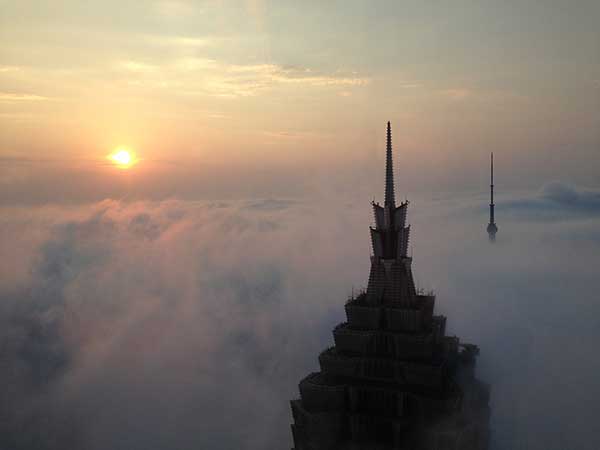
 But Isaiah was not just pointing to the city of Jerusalem that was rebuilt after the exile. He was pointing to the time when God’s rule would come down to earth. God would bring in a whole new order, a new creation. The city of which Isaiah spoke was a picture of God’s rule and the glory of a new and lasting city where God himself would fill the city with the light of this presence.
 No matter how heart-breaking our situation, no matter how perplexing, we can be assured that life is not out of God’s control. Tragedies and disasters don’t mean that God’s hands have slipped from the helm or that he is asleep. They are events allowed by a sovereign God who is in control, and who often uses such events as a wake up call for us.